

Keynote for the Wolf Humanities Center's February 27, 2026 day-long symposium, Truth in Crisis
In the wake of the murder of George Floyd by a Minneapolis police officer, the transnational protests challenging the murder and harassment of Black people by police, and the ongoing civil rights struggle and Black Lives Matter movement, community organizers, artists, filmmakers, and scholars directed increased attention to the relationship between visual culture and policing, state violence, and the global prison industrial complex. Over the past decade, calls for “abolition documentary” have asked: What would constitute a moving image practice of abolition?
In contrast to appeals to new forms of documentary filmmaking, others hail essayistic practice — and what is referred to as “the essay film”— as distinctly compelling for interrogating systems of discipline and punishment: its suspicion of authoritarian modes, resistance to classification, interrogation of aesthetic codes and social norms, reflection on its conditions of production, implicit critique of the “lure of referentiality,” and attentiveness to the history of media, technology, and film form. From this perspective, the essay film emerges as a crucial additional approach to moving-image practice committed to the abolition of prison and police. But if our current historical moment is marked by “truth in crisis,” do nonfiction films that resist truth claims risk complicity with regressive political movements? Or do these works open up space for critical reflection on technology, power, and truth-making?
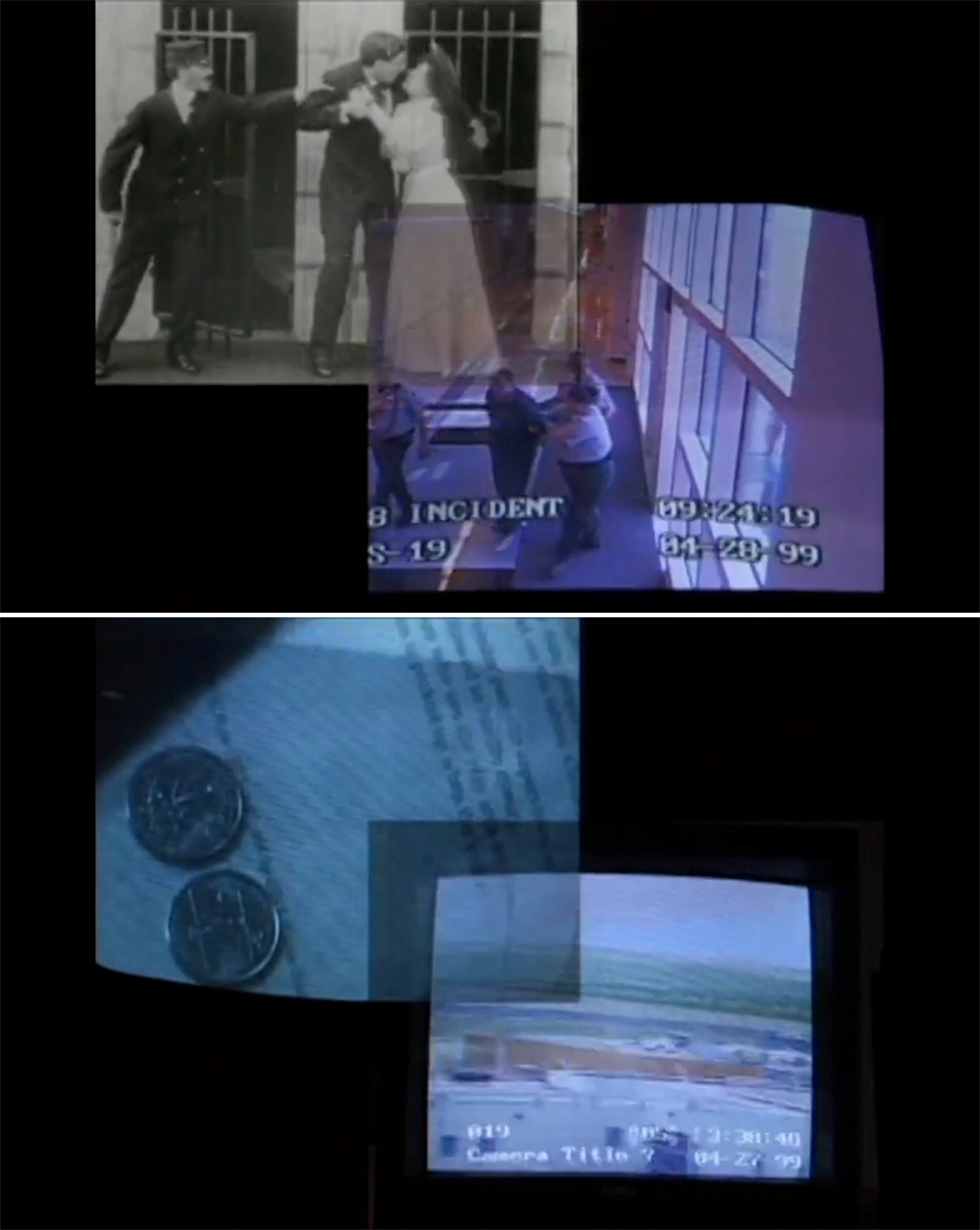
This keynote explores these questions through Dr. Wasow's research on silent cinema and the carceral, reflections on filmmaking in carceral spaces, media-making by filmmakers who are or were formerly incarcerated, and current collaborations. With German filmmaker Harun Farocki’s I Thought I Was Seeing Convicts (2000) — holding it as neither model nor example, but as a work from which to borrow strategies and a site for thinking possibilities at the intersection of essayistic filmmaking and what filmmaker-geographer Brett Story calls “an imagery of prison abolition.”
In advance of Dr. Wasow’s keynote lecture, we invite you to watch her short film, the wannabe (2006, 24m), which can be viewed here.
Keynote moderated by Jennifer Sierra, Wolf Humanities Center Postdoctoral Fellow, University of Pennsylvania.
 Althea Wasow is Assistant Professor and Director of Undergraduate Studies in Film and Media Studies at UC Santa Barbara. She is revising her monograph, Moving Images/Modern Policing: Silent Cinema and Its Afterlives, which analyzes the complicity and resistance between police power and motion pictures in early cinema. She is also developing an essay film on Bert Williams entitled, Nobody. Her films—including the wannabe (featuring Ramón Rodríguez) and The Whole World Revolved Around Her (featuring Wangechi Mutu)—have screened at film festivals and cultural institutions such as Institute of Contemporary Art/Boston, Schomburg Center for Research in Black Culture, and Queens Museum of Art. Wasow is co-PI of “The Satellite Coast” (PI Lisa Parks & co-PI Carlos Jimenez, Jr.), an NSF-funded Science and Technology Studies project that examines impacts of increased commercial satellite launching. She is a co-founder of the Center for Urban Pedagogy (CUP) and has taught in jails and prisons in New York and California.
 Jennifer Sierra’s research explores human-machine relationships among Shipibo-Konibo people (who refer to themselves as “Shipibo”), an Indigenous community in the Peruvian Amazon rainforest. Drawing on insights from linguistic anthropology, Indigenous studies, critical digital media studies, and science and technology studies (STS), her work offers a nuanced cultural analysis of digital technology use and media infrastructure access in the Amazon region. Jennifer earned her Ph.D. in linguistic anthropology from the University of Michigan, where she also completed a graduate certificate in digital studies.