


Priya Nambrath is a PhD Candidate in the Department of South Asia Studies at the University of Pennsylvania. Her dissertation research focuses on the applied practice of mathematics and astronomy in the sociocultural life of medieval and pre-modern Kerala. More broadly, she is interested in the intellectual and scientific history of India with a focus on cultural encounters, archaic modernisms, patronage and pedagogy. Language and literature, textual culture, and visual art constitute additional related areas of focus around her project. She is also interested in folk traditions of art and knowledge in South India, and ocean-facing histories of the region. Her research has been supported by the Fulbright Scholarship program, the American Philosophical Society and the Consortium for History of Science, Technology and Medicine. Her papers are forthcoming in Puṣpikā: Tracing Ancient India Through Texts and Traditions: Contributions to Current Research in Indology and the Journal for the History of Astronomy.
Priyamvada Nambrath
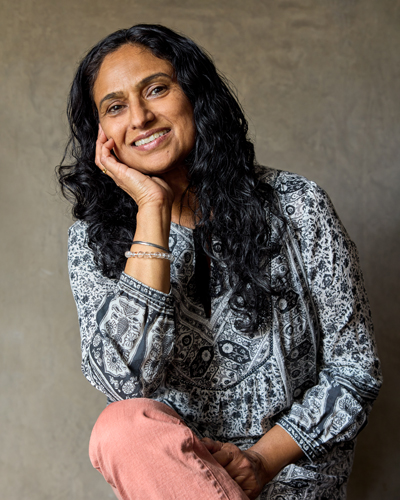
Wolf Humanities Center Doctoral Fellow
2025—2026 Forum on Truth
Priyamvada Nambrath
Ph.D. Candidate, South Asia Studies
Constructed and Structural Impartialities: On Truth Claims around Medieval Kerala Mathematics
This project interrogates the construct of ontological truth intertwined in the reception of late medieval Kerala mathematics in colonial scholarship, and in the tradition’s own self-understanding as revealed in canonical texts and vernacular commentaries. The beginnings of modern scholarship on Indian mathematics are situated in its colonial legacy, wherein scholarship was embedded in the lived experience of empire, and reflected and perpetuated cultural polarities. The project will examine the Kerala tradition’s own self-narratives, and delineate the complex and mutually reciprocal methods of knowing through which multiple scholars, invested in the process of knowledge making, navigated fixed and fluid disciplinary boundaries. In the encounter of these two truth systems, colonial and Indian mathematics, the project will examine how divergences from the perceived mathematical mainstream became sites of contention and narrative building in the larger imperial project of knowledge making.