


Ketaki Jaywant earned her PhD in History from the University of Minnesota. She is a historian of Modern South Asia with research interests in the history of anti-caste critique, liberalism in South Asia, nineteenth-century socio-religious reform, and print culture on the margins. Her current book project examines how ‘lower-caste’ writers, many of whom worked as shopkeepers, constables, and contractors, shaped the world of nineteenth-century anti-caste ideas. By deeply thinking about the resources, traditions, and genealogies that ‘lower-caste’ radicals drew upon and aligned themselves with, Jaywant explores the expressions of people who were not considered intellectuals in both their time and ours. Her book argues that ‘lower-caste’ activist-writers were the first to systematically reframe caste as a fundamentally political phenomenon and a social relationship primarily rooted in conflict. She is also the recipient of the 2021 Sardar Patel Award for writing the best dissertation on any aspect of modern South Asia at a U.S. university.
Ketaki Jaywant
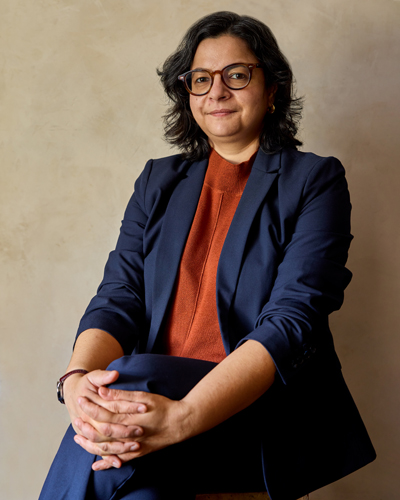
Wolf Humanities Center Penn Faculty Fellow
2025—2026 Forum on Truth
Ketaki Jaywant
Assistant Professor, South Asia Studies
Secularizing Caste: The Anti-Caste Discourse of the Truth Seekers in Nineteenth-century Western India
Secularizing Caste narrates how lower-caste writers, who otherwise worked as shopkeepers, construction contractors, and constables, began publishing and reframed caste as a wholly political phenomenon. By emphasizing the exploitative character of caste rituals and religious ideas, they contended that caste was not merely an ‘illogical’ ritual obstacle (an argument often made by elite social reformers), but it was a conflictual and humiliating social relationship. This project draws on rare Marathi-language texts to argue that lower-caste writers radically secularized caste by bringing the entire edifice of the dominant Hindu religion under scrutiny. It argues that lower-caste writings that problematized the place of caste in religion, and religion in peoples’ public lives, were some of the earliest discussions on the idea of secularism and secularization in South Asia.