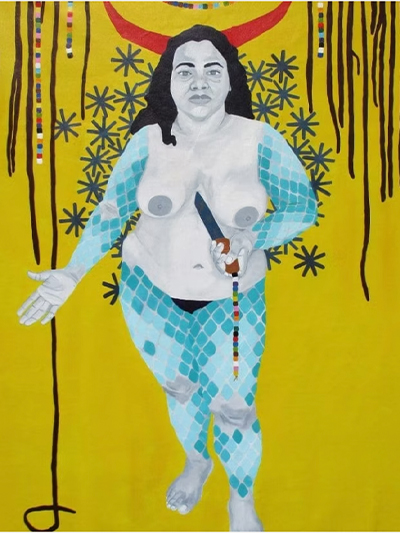


"Yet, the belly of this boat dissolves you, precipitates you into a nonworld from which you cry out. This boat is a womb, a womb abyss. It generates the clamor of your protests and produces all the coming unanmity. Although you are alone in this suffering, you share the unknown with others you have yet to know. This boat is your womb, a matrix, and yet it expels you. This boat: pregnant with as many dead as living under sentence of death." (Edouard Glissant, Poetics of Relation)
"It has proven difficult, if not impossible, to assimilate black women's domestic labors and reproductive capacities within narratives of the black worker, slave rebellion, maroonage, or black radicalism, even as this labor was critical to the creation of value, the realization of profit, and the accumulation of capital. It has been no less complicated to imagine the future produced by such labors as anything other than monstrous." (Sadiya Hartman, "The Belly of the World")
If Black people are born into the Americas through the abyssal womb of enslavement and colonialism, then it is by the work and wombs of Black women that they will find essential tools for liberation. In inverting the attempted subjugation of their labours and bodies, Afro-Latinas look into the abyssal womb, and locate in herself and across generations of those she cares for and feels for the possibility to bring about the collapse of coloniality.
Centering the role of Afro-Latina women in the Americas in processes of cultural production and the maintenance of collective memory, this day-long symposium endeavors to highlight how Black women in Latin America and the diaspora refuse and move outside of the capture of Western ways of knowing and being. Moving between theory, praxis, and poetics (with all of them at times inextricably intertwined), the symposium will feature rich discussions that culminate in a critical dialogue about the future yet to be born and Afro-Latina women's role in its labour.
Exalting the defiance of Afro-Latina women in the face of colonial violence and erasure, this symposium reads the "womb" as a site of embodied inheritance and as a theoretical tool with creative potential rather than as a strict bioessentialist object of sex/gender. The abyssal colonial "womb" is that which must be destroyed to bear the new "new world." It is through the need to destroy the abyssal womb that the thread of monstrosity will be turned to; to take up and take seriously the demonic dreamings of Sylvia Wynter is to become the monster that colonialism can no longer capture. For Afro-Latinas to bear the future to come is to dream in and of monstrosity.
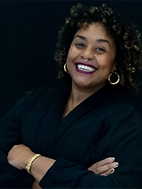 Yomaira Figueroa-Vásquez is Professor of Africana, Puerto Rican & Latino Studies and Director of the Center for Puerto Rican Studies (CENTRO) at CUNY Hunter. She is the author of the award-winning Decolonizing Diasporas: Radical Mappings of Afro-Atlantic Literature (Northwestern University Press, 2020; EEE 2023) and the forthcoming book, The Survival of a People (Duke University Press) which traces the disappearances and excesses of Afro-Puerto Ricans in the colonial archive and in contemporary cultural memory from the late 19th century to the present.
Talk Title: Against Olvido: Motherhood, Memory and the Mangle
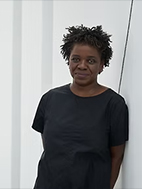 Denise Ferreira da Silva is the Samuel Rudin Professor in the Humanities in the Department of Spanish & Portuguese and Co-Director of the Critical Racial Anti Colonial Study Co-Lab at New York University. An academic and an artist, Dr. Denise Ferreira da Silva writes on crucial global issues, which she approaches from an anticolonial black feminist perspective. A prolific author, her field-changing books—such as Toward a Global Idea of Race and Unpayable Debt—have been published by major presses. She has exhibited and lectured at major art venues, such as the Pompidou Center (Paris), Whitechapel Gallery (London), MASP (Sāo Paolo), Reina Sofia (Madrid), The Belkin (Vancouver), Guggenheim (New York), MACBA (Barcelona), and MoMA (New York) as well as the 10th Berlin Biennale.
Talk Title: Female Flesh Ungendered—A Composition
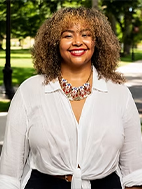 Omaris Z. Zamora is a transnational Black Dominican Studies scholar and spoken-word poet. Her research interests include: theorizing AfroLatinidad in the context of race, gender, sexuality through Afro-diasporic approaches. Her current book project tentatively titled, Cigüapa Unbound: AfroLatina Feminist Epistemologies of Tranceformation examines the transnational Black Dominican narratives put forth in the work of Firelei Baez, Elizabeth Acevedo, Nelly Rosario, Ana Lara, Loida Maritza Pérez, Josefina Baez, Cardi B, and La Bella Chanel. Zamora's work has been published in Post45, Latinx Talk, Label Me Latina/o, among others and has been featured on NPR's Alt.Latino podcast. She fuses her poetry with her scholarly work as a way of contributing to a black poetic approach to literature and cultural studies.
Talk Title: Ciguapa Unbound: AfroLatinx Feminist Epistemologies in Transnational Geographies of Marronage